
Invited speakers
Keynote speaker
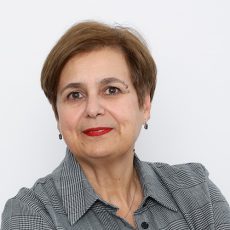
Eleftheria N. Gonida
Affiliation
Short bio
The role of parents in students' motivation and engagement: Theory, evidence and implications for practice"

Fani Lauermann
Affiliation
Professor of Education and Psychology, University of Bonn, Germany
Short bio
Fani Lauermann, PhD, is Professor of Empirical Educational Research and Educational Psychology at the University of Bonn, Germany, and affiliate faculty in the Department of Psychology. She is also an Associated Researcher at the Center for Research on Education and School Development at TU Dortmund University, a Research Affiliate with the Gender and Achievement Research Program at UCI, and an investigator in the Cluster of Excellence ECONtribute. She holds a Diplom-Psychologist degree from the University of Bonn and earned her doctorate in Education & Psychology at the University of Michigan, USA. Her research focuses on academic motivation and achievement, educational trajectories and occupational choices, as well as teacher motivation and instructional quality. She is a former coordinator of EARLI SIG8 Motivation and Emotion and a former Associate Editor of EARLI’s flagship journal Learning and Instruction. Her work has made significant contributions to understanding how motivational dynamics shape both student and teacher outcomes.
Small funny fact about me: Each member of my immediate family—my husband, our daughter, and I—has a different nationality, and we use three languages every day. My favorite ways to relax are painting in watercolors and playing the piano.
Turning the Investigative Lens on Teachers: When and How Teacher Motivation Shapes Classroom Processes and Outcomes"
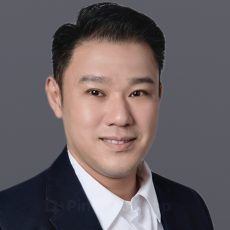
Gregory Liem
Affiliation
Short bio
Gregory Arief D. Liem is an Associate Professor in the Psychology and Child & Human Development Academic Department at the National Institute of Education, Nanyang Technological University, Singapore. His research focuses on student motivation and engagement from sociocultural perspectives. His recent work advances an interdependent-self perspective on motivation and agency, complementing mainstream motivational theories. He is the Book Series Editor of Research on Sociocultural Influences on Motivation and Learning (Emerald, UK) and currently serves as Associate Editor for Educational Psychology: An International Journal of Experimental Educational Psychology and Psychology in the Schools, as well as on the editorial boards of several other leading journals. He enjoys collaborating with local and international scholars, most recently resulting in journal special issues and an edited volume on sociocultural influences on student motivation (with Mimi Bong), achievement goals (with Corwin Senko), and student engagement (with Jennifer Fredricks).
Small funny fact about me: • Gregory enjoys discovering local cafés wherever he travels—especially those that serve both good coffee and quiet corners for reading and writing. • He is an avid solo traveler who loves walking through old neighborhoods to observe how people live, interact, and find meaning in everyday life—a small reflection of his sociocultural curiosity.
Why We Strive: The Meaning of Goal Pursuit Through a Sociocultural Lens"
Why do people strive? Mainstream theories of motivation have largely answered this question by privileging self-oriented motives such as self-worth, self-enhancement, and self-verification. Accumulating theoretical and empirical work, however, suggests that this emphasis reflects culturally specific assumptions about agency and the self, rather than universal principles of goal pursuit and human behavior more broadly. From a sociocultural perspective—particularly distinctions between independent and interdependent selfhood—striving is not only intrapersonal but also interpersonal, embedded in social relationships, roles, and normative expectations. Goals are therefore often pursued for both self-oriented and socially oriented reasons. Understanding goal pursuit thus requires moving beyond a self or social framing toward an integrative account that considers both motivational orientations together. Although this argument is initially motivated by sociocultural perspectives on how selves are organized across contexts, it becomes increasingly clear that personal and social motives are not culture-bound but are universally available features of human motivation. What varies across cultures, contexts, and individuals is not the presence or absence of these orientations, but their relative salience, expression, and meaning. The presentation concludes by discussing implications for motivation theory and research and for how agency, engagement, and purpose are conceptualized across diverse settings.

Tim Urdan
Affiliation
Short bio
Tim Urdan is Professor of Psychology at Santa Clara University (USA). He earned his Ph.D. in Education and Psychology from the University of Michigan. His research focuses on student motivation and achievement, with particular attention to how cultural, social, and classroom factors influence students’ beliefs, goals, and academic engagement. He examining teacher motivation, emotions, and identity, as well as the quality of teacher–student relationships and their impact on learning.
He has published extensively in leading journals, co-edits the Advances in Motivation and Achievement book series, and was a co-editor of the Adolescence and Education book series. Professor Urdan is internationally recognized for his contributions to understanding the complex interplay between motivation, culture, and education.
The Relationship between Motivation and Self-Regulated Learning: A Complexity Perspective"
Mid-career speaker

Julia Mori
Affiliation
Short bio
PhD Dr. Julia Mori is an advanced postdoctoral researcher and lecturer at the University of Bern (Institute of Educational Science) and a senior researcher at the University of Teacher Education in Special Needs (HfH), Switzerland. Her research focuses on socio-emotional phenomena in schools—and how schools can cultivate and sustain student and teacher well-being in everyday school life. She led the SNSF project “Well-being in School in Switzerland” (WESIR; 2021–2025), in which she and her team developed and tested a 10-week, multicomponent school-based intervention. A former Junior Coordinator of EARLI SIG 8, Julia Mori is active in promoting well-being and mental health among early- and mid-career researchers. She currently contributes her knowledge and methodological expertise to several interdisciplinary projects (e.g., robotics in education; music and social-emotional learning in mathematics education) and is committed to translating research for educators, school leaders, and policymakers. In her free time, she enjoys playing the RAV drum, laughing with her kids, and fast running in the woods.
Small funny fact about me: When my kids finish arts-and-crafts, I’m the one asking for five more minutes — crafting is my happy place.
Promoting student well-being in uncertain times: Lessons from school-based interventions"
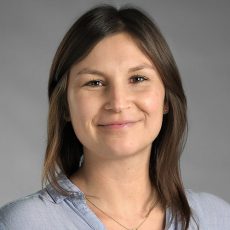
Kristina Stockinger
Affiliation
Short bio
Kristina Stockinger is an assistant professor in the department of psychology at the University of Augsburg in Germany. She earned her Ph.D. in psychology from the University of Munich in Germany after receiving her graduate degree in teacher education there. As part of her doctoral studies, she completed the Doctoral Training Program in the Learning Sciences at the University of Munich and was an associate member of the REASON doctoral program funded by the Elite Network of Bavaria. Her research interests target various aspects related to individuals’ emotional and motivational experiences in the context of learning and achievement, including the origins of emotions, the interplay of emotions with motivation and well-being, and forms and functions of emotional and motivational self-regulation in educational settings. She is currently particularly interested in how students manage their emotions and motivation to influence their well-being and learning as well as gaining insight into effective approaches for supporting students in these efforts. She served as Junior Coordinator of the Motivation and Emotion SIG of the European Association for Research on Learning and Instruction (EARLI) from 2017 to 2019.
Self-regulation of motivation and emotions: Bridging research traditions and re-centering students’ perspectives"